


I was at a conference last month and asked some people at my table, “Is there proof that AI is taking people’s jobs?” Someone answered, “Junior software developers are being replaced by AI.” It felt like an echo of the 2025 New York Times article that claimed entry-level software developers are seeking jobs at Chipotle because even the best graduates can’t find a job.
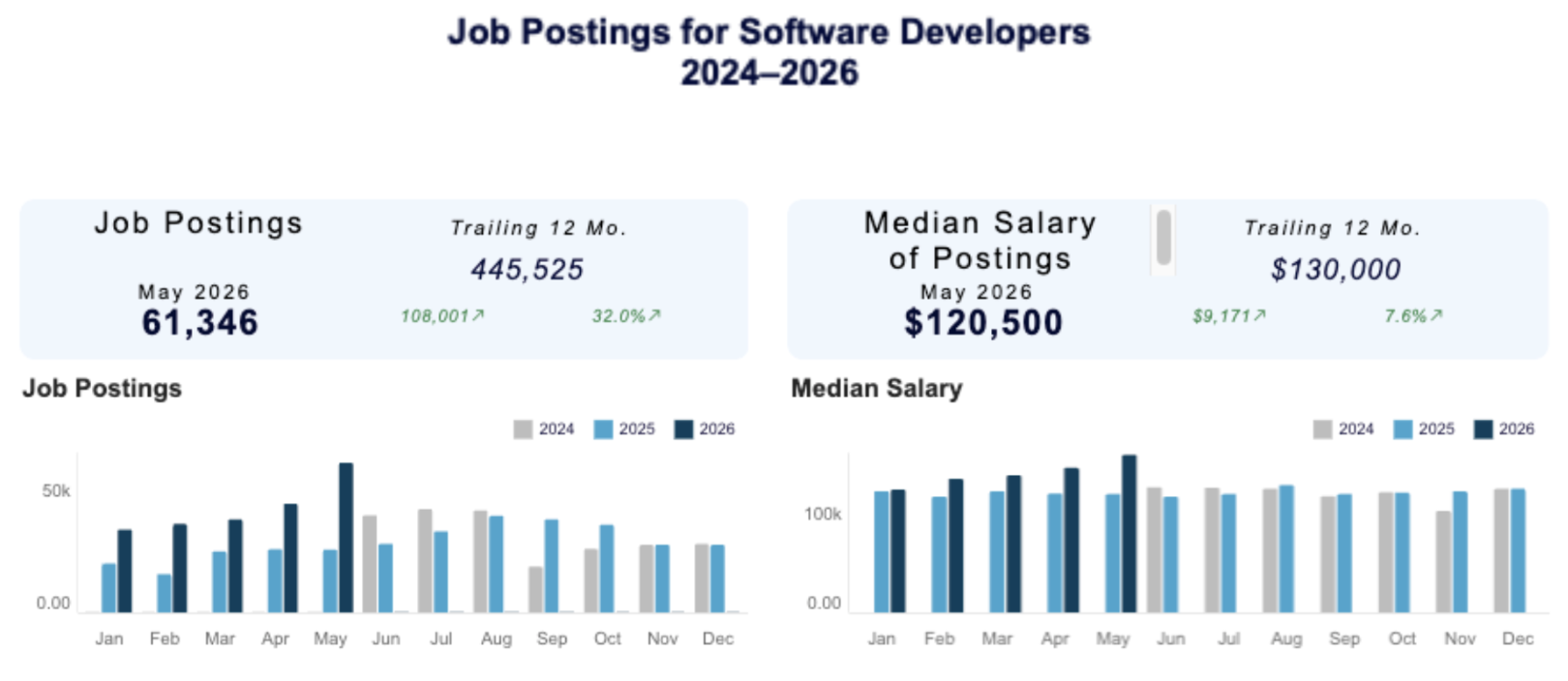
Despite a few seasonal dips in 2025, software developer jobs have increased significantly year to date. Gray DI’s data shows there were 445,525 postings over the trailing 12 months, with median salaries up to $130,000. That’s 108,000 postings more than the prior year (up 32 percent).
Source: Gray DI’s Workforce Insights Dashboard
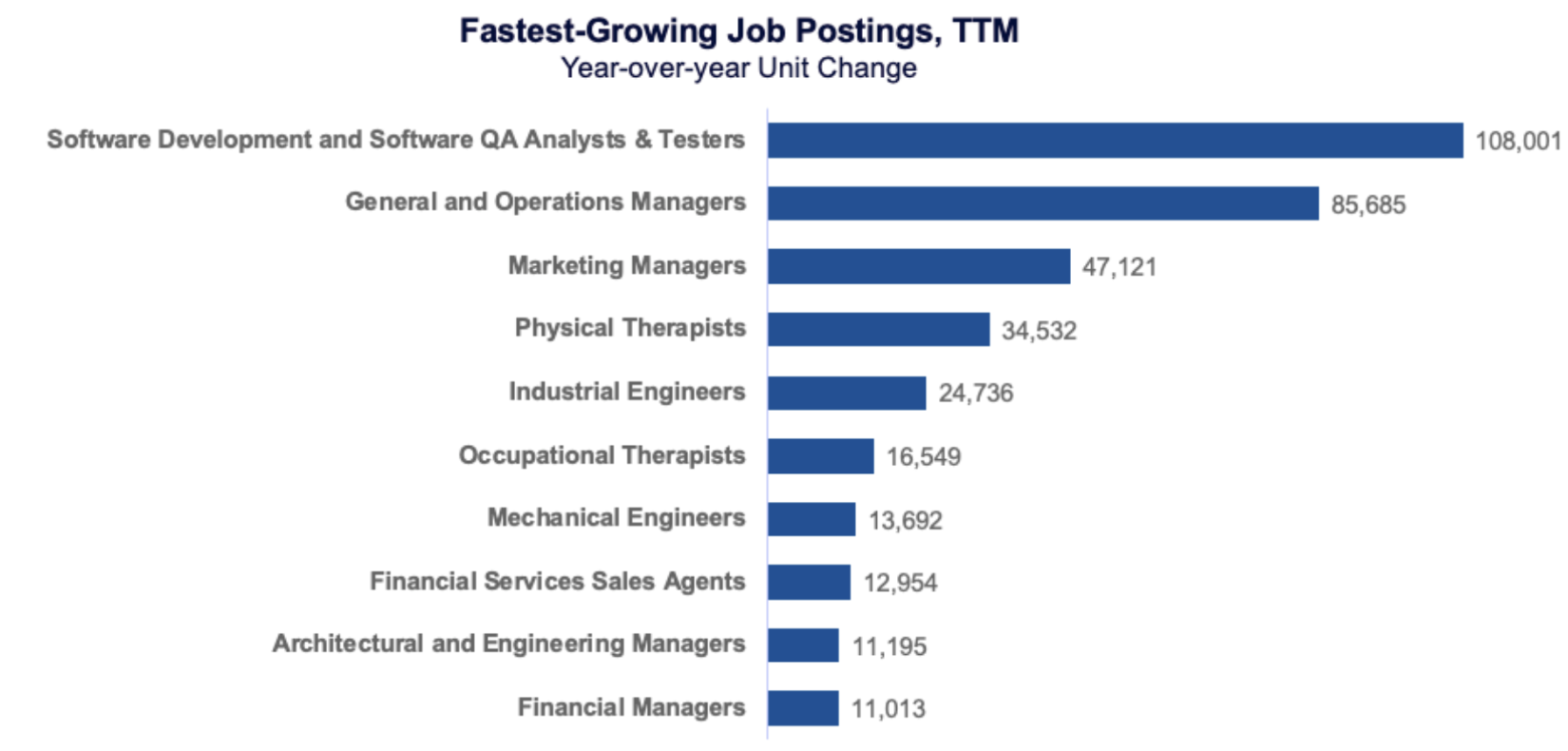
In fact, software developer is the fastest-growing job over the trailing 12 months out of all jobs requiring an associate degree or above.
Source: Gray DI’s Workforce Insights Dashboard
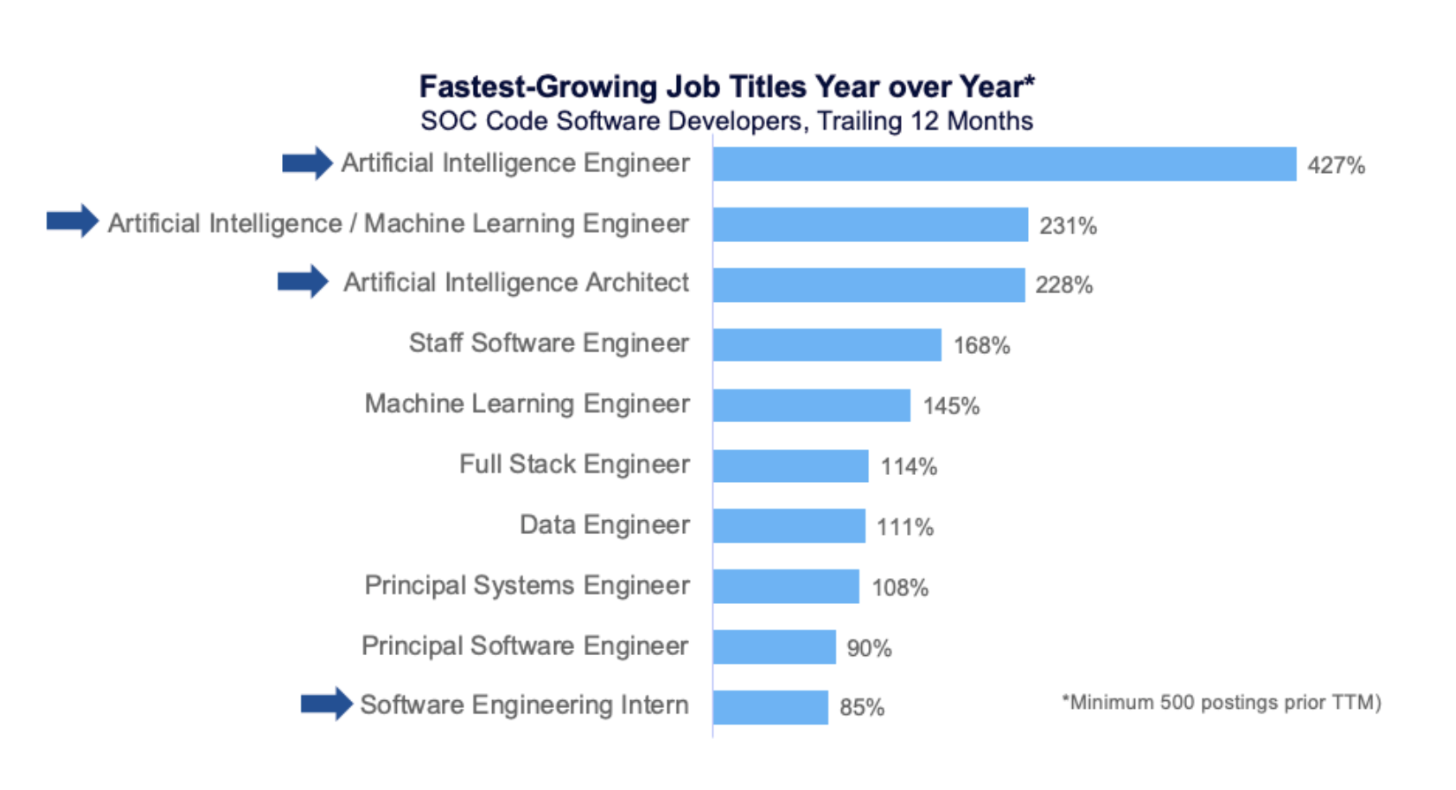
Data on job titles falling under the occupational code for software developers (15–1256 Software Development and Software QA Analysts & Testers) reveals a growing demand for AI engineers.
At the same time, enrollment and completions in Artificial Intelligence programs have increased dramatically. From 2019 to 2024, completions grew on average 28 percent annually, and from Academic Year 2020–21 to 2025–26, new enrollment grew 55 percent. That excludes the hundreds of Computer Science programs that offer AI as a concentration. Graduates of these programs could very well be qualified for job titles related to AI.
Growth for intern developers has not slowed down either. Software Engineering Intern is the 10th fastest-growing job title for software developers. (Of course, we are not positive they are getting paid).
The Death is Not a Total Exaggeration
Junior developers have taken a hit in the job market, according to studies like Stanford Digital Economy Lab’s “Canaries in the Coal Mines.” Software employment for workers aged 22 to 25 dropped by nearly 20% from its peak following the late-2022 rollout of mainstream AI tools.
But companies are trading short-term speed for long-term maintenance debt. Until AI agents get significantly better at verifying system-wide architectural logic, the time saved on coding is largely being spent in code review and debugging.
As pointed out in The AI Productivity Paradox, independent controlled studies show that task completion is up to 19 percent slower with AI’s prolific coding output. Those responsible for reviewing code are now “overwhelmed with 98 percent more code reviews that take 91 percent longer to review.” Senior Engineers experience a net loss in time because they spend their days reading “AI slop” and hunting logic bugs. Sounds like we need more human software developers to help out…
The evidence indicates that reports of the software developer’s death are greatly exaggerated, and companies that have replaced junior developers with AI might re-think their strategy.