
Student demand data for academic programs is crucial – it drives enrollment and revenue. Oddly enough, it is often overlooked or underrated as program evaluators focus on employers and jobs, which are important to ensure graduates get jobs but are not tightly linked to enrollment. In our view, student demand and employment are peers. This raises the question of how colleges and universities can track student demand for current and potential new programs. Fortunately, there are several sources for student demand data: IPEDS, Enrollment, and Google Search Volume; each has its own idiosyncrasies.
IPEDS: Program Completion Growth
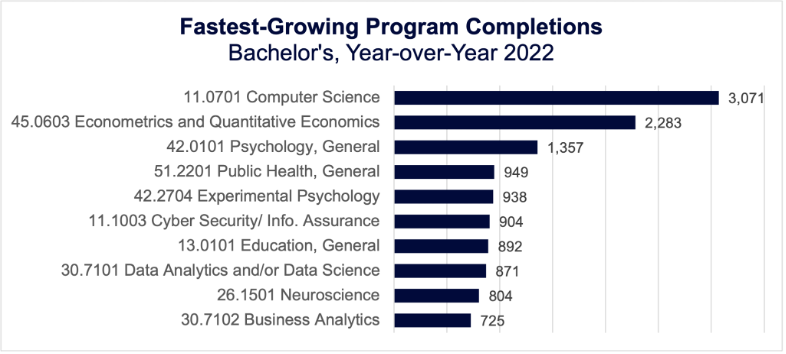
Every summer, for each academic program, all Title IV institutions report the number of completions for the prior academic year to the Integrated Postsecondary Education Data System (IPEDS). IPEDS usually publishes the data in the summer or fall of the following year. For example, the completions for the 2022 academic year were released in the fall of 2023. As a result, while very thorough, IPEDS completion data is always stale. Further, since students pick their majors 2-3 years before graduation, the 2022 completions tell us what students wanted in 2019-2020, not what they want today.
As we know, a lot has changed since then. Current enrollment growth rates may help fill in the gaps.
Source: Gray DI’s PES Markets
New Student Enrollment Growth
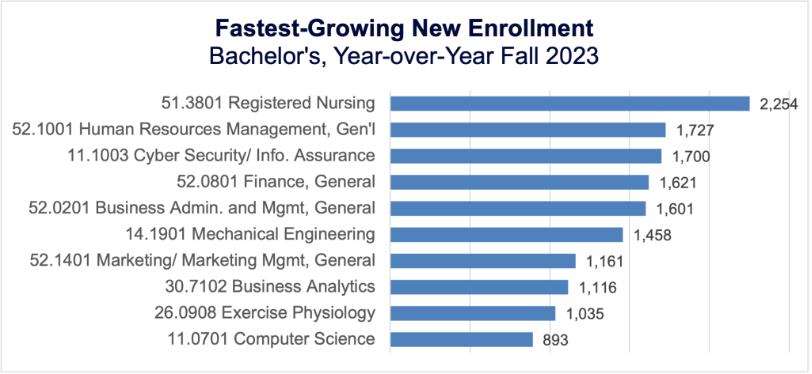
Enrollment is a current metric, released three times a year, that can show what students wanted to take as recently as the previous semester. Looking at the fastest-growing programs for new student enrollment specifically, institutions can evaluate whether they are keeping up with burgeoning student demand. There is some overlap between the fastest-growing programs for completions in 2022 and the fastest-growing programs for new student enrollment in 2023: Computer Science, Cyber Security, and Business Analytics made the top 10 for both metrics. The two sources provide more information about student demand growth when taken together.
Source: Gray DI’s PES Program Enrollment Dashboard
Google Keyword Search Growth
For a glimpse into the future, Google keyword searches reveal the programs students seek, even before they enroll. Gray DI updates the data monthly, so the information is up-to-date. Search trends tend to be volatile, so persistent longer-term trends in search volumes are more reliable indicators than a large one-month jump.
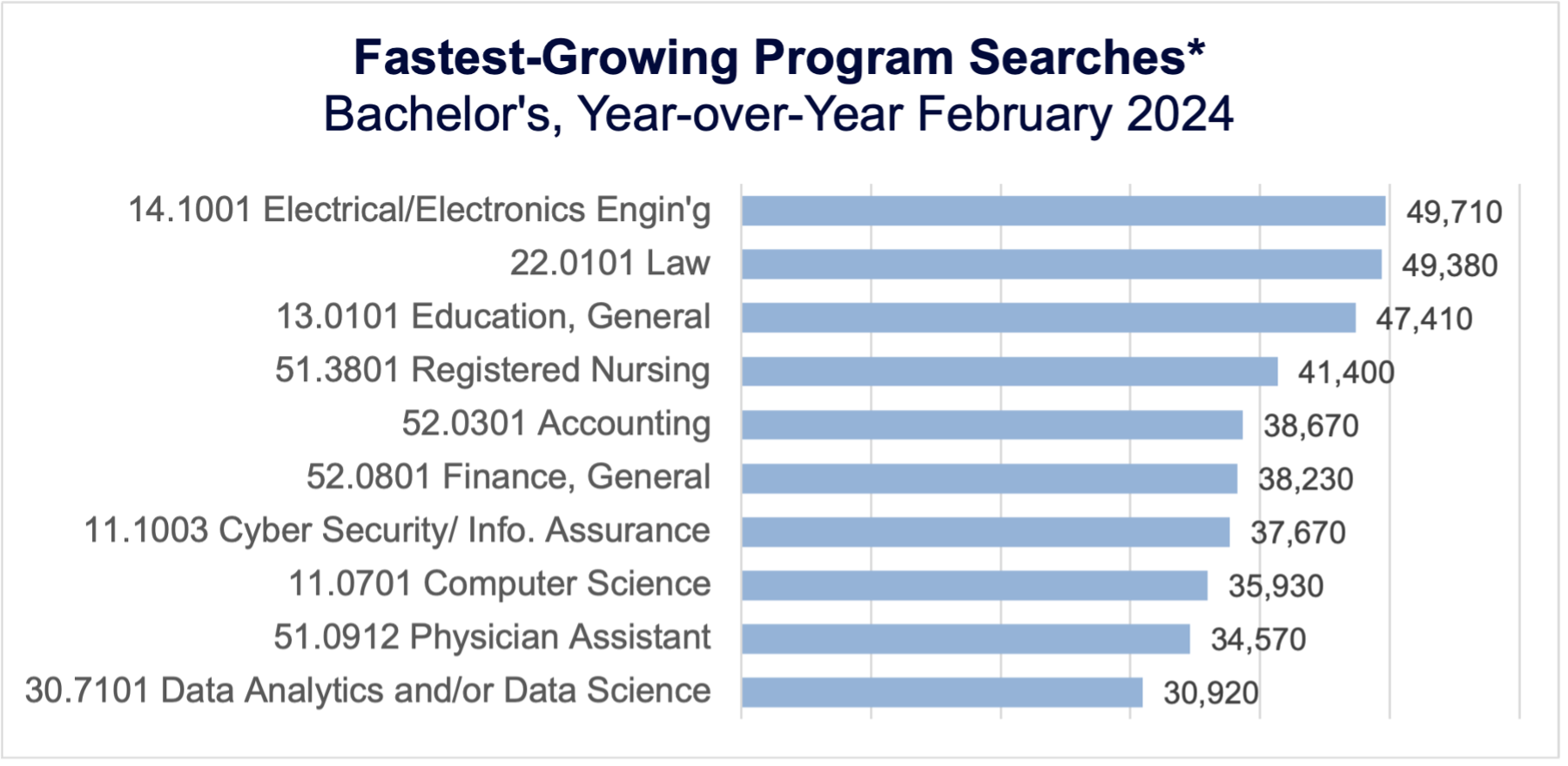
Source: Gray DI’s PES Keyword Search Dashboard
*Excludes undergraduate certificates
Better still, look for programs where all three indicators, IPEDS completions, enrollment, and Google Search volume, are headed in the same direction. In February 2024, Google searches for Electrical Engineering programs grew by nearly 50,000 year-over-year. Still, this sector has not yet experienced particularly strong growth in completions or enrollment – though Google suggests it may in the future. However, Computer Science and Cyber Security have sustained growth in completions, enrollment, and keyword searches, indicating strong student demand in the past, present, and near future. These are the programs that are most likely to increase enrollment and revenue.