
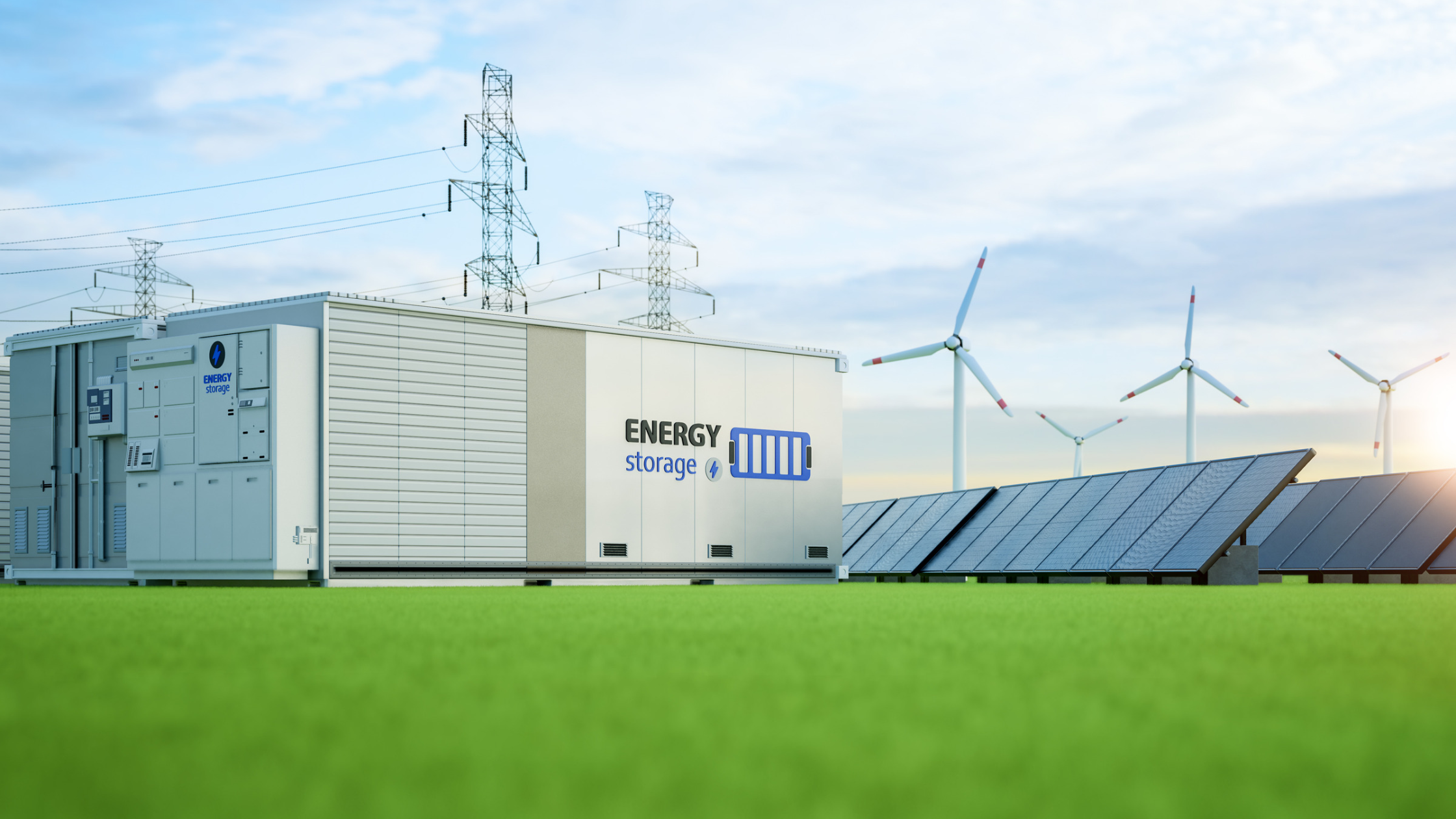

This article is part of our Where Are They Now? Emerging Program Series. Three years after Gray DI identified energy storage as an emerging opportunity, the lesson may be bigger than batteries: Sometimes the smartest new program isn’t a new degree at all.
In 2023, Gray DI identified energy storage as an emerging academic opportunity. Three years later, the industry has grown at a remarkable pace. Battery storage capacity has soared, new facilities have opened, and demand for specialized technical skills is expanding.
So where are all the new energy storage degrees?
That’s where the story gets interesting.
The Battery Boom is Real
According to the US Energy Information Administration, US utility-scale battery storage capacity exceeded 26 gigawatts (GW) by the end of 2024. By June 2006, it had reached nearly 52 GW. That is nearly double the capacity in just 18 months. Looking at the course of time over the preceding three years, battery storage capacity grew at an average annual rate of 70 percent.
That growth may have been helped by declining battery costs, renewable energy expansion, and growing demand for grid reliability. Building the infrastructure is only part of the challenge. The industry also needs people who understand battery chemistry, electrical engineering, manufacturing, safety, and energy systems. (See emerging program for energy storage)
Higher ed is responding, but maybe not in the way we expected.
Where Are the New Energy Degrees?
When Gray DI first examined energy in 2023, several institutions were already experimenting with specialized academic offerings in Energy Storage.
The University of North Dakota offered a graduate certificate in Energy Storage Systems, and the University of Nevada, Reno developed an undergraduate minor in Batteries and Energy Storage Technologies, connecting academic preparation to Nevada’s growing battery manufacturing industry.
Since then, additional graduate-level options have emerged.
Purdue University included a Master of Science in Battery and Energy Storage Engineering among its 2024-25 new program initiatives. Wayne State University offers a master’s degree in Mechanical Engineering with a concentration in Energy Storage and Vehicle Science.
And the University of Washington is advertising its graduate certificate in Intelligent Battery Engineering and Automated Manufacturing for winter 2027.
But the more interesting development may be happening outside traditional degree programs.
The Workforce Is Moving Faster Than the Degree Catalog
Rather than building entirely new majors, some institutions are embedding battery expertise into existing programs, creating shorter credentials, and partnering directly with employers.
In New York, the National Science Foundation-backed Energy Storage Engine Scholars Initiative connects Binghamton University, Rochester Institute of Technology, Syracuse University, and the University at Buffalo.
Launched in August 2026, the initiative aims to prepare at least 400 scholars annually through a coordinated pathway that includes K-12 exposure, community college education, university coursework, and industry experience.
The University at Albany is taking another approach, offering hands-on energy storage training that includes battery construction, testing, and safety.
Meanwhile, Binghamton University has developed a Sustainable Energy Engineering track within electrical engineering, and RIT has delivered battery technology training for community college students.
These examples suggest a noteworthy shift: Colleges aren’t necessarily creating entirely new disciplines to serve energy storage. They’re adapting the disciplines they already have.
What Should Higher Education Learn?
Energy storage illustrates an important distinction between identifying an emerging industry and determining the right academic response.
A rapidly growing industry doesn’t automatically require a new degree.
Sometimes the opportunity is a graduate certificate, an engineering concentration, an interdisciplinary course sequence, or a workforce partnership that builds on existing institutional strengths.
For colleges and universities evaluating emerging programs, the question isn’t simply whether an industry is growing. It’s whether student interest, employer needs, regional opportunity, competition, and program economics support a particular credential.
Energy storage has clearly demonstrated its industrial momentum. The academic response is still taking shape.
Energy storage is just one of the emerging opportunities reshaping higher education. What other programs should be on your radar for 2027? Join Gray DI for our 2027 Emerging Programs Webinar to explore new opportunities and the data behind them.