
Two years ago, we wondered whether AI could help us talk to animals. We checked back in, and there’s quite a bit of chatter.
Back in 2024, our Emerging Programs webinar explored the possibility of using artificial intelligence to understand what animals say to one another.
Could we someday understand whale songs? Decode elephant calls? Figure out what all those birds are arguing about every morning?
It was a fun idea, but there was some serious science behind it. During the webinar, and again in our article, Prelude to an Inter-Species Symphony: Digital Bioacoustics in Higher Education, we suggested that digital bioacoustics could create academic opportunities combining biology, computer science, acoustic engineering, and AI.
Two years later, it’s time to check in. And as it turns out, the animals haven’t been quiet, and neither have the researchers.
We’re Getting Closer to Understanding the Conversation
In April 2025, Google introduced DolphinGemma, an AI model developed with researchers at Georgia Tech and the Wild Dolphin Project. Trained on dolphin vocalizations, it can identify patterns in their sounds and generate new dolphin-like sequences.
That’s an interesting development. Instead of simply identifying which animal made a sound, researchers are beginning to explore the structure of the communication itself.
And dolphins aren’t the only ones getting attention.
In April 2026, researchers with Project CETI published findings showing that sperm whale clicks contain vowel-like acoustic patterns, adding another piece to the puzzle of how these enormous mammals communicate.
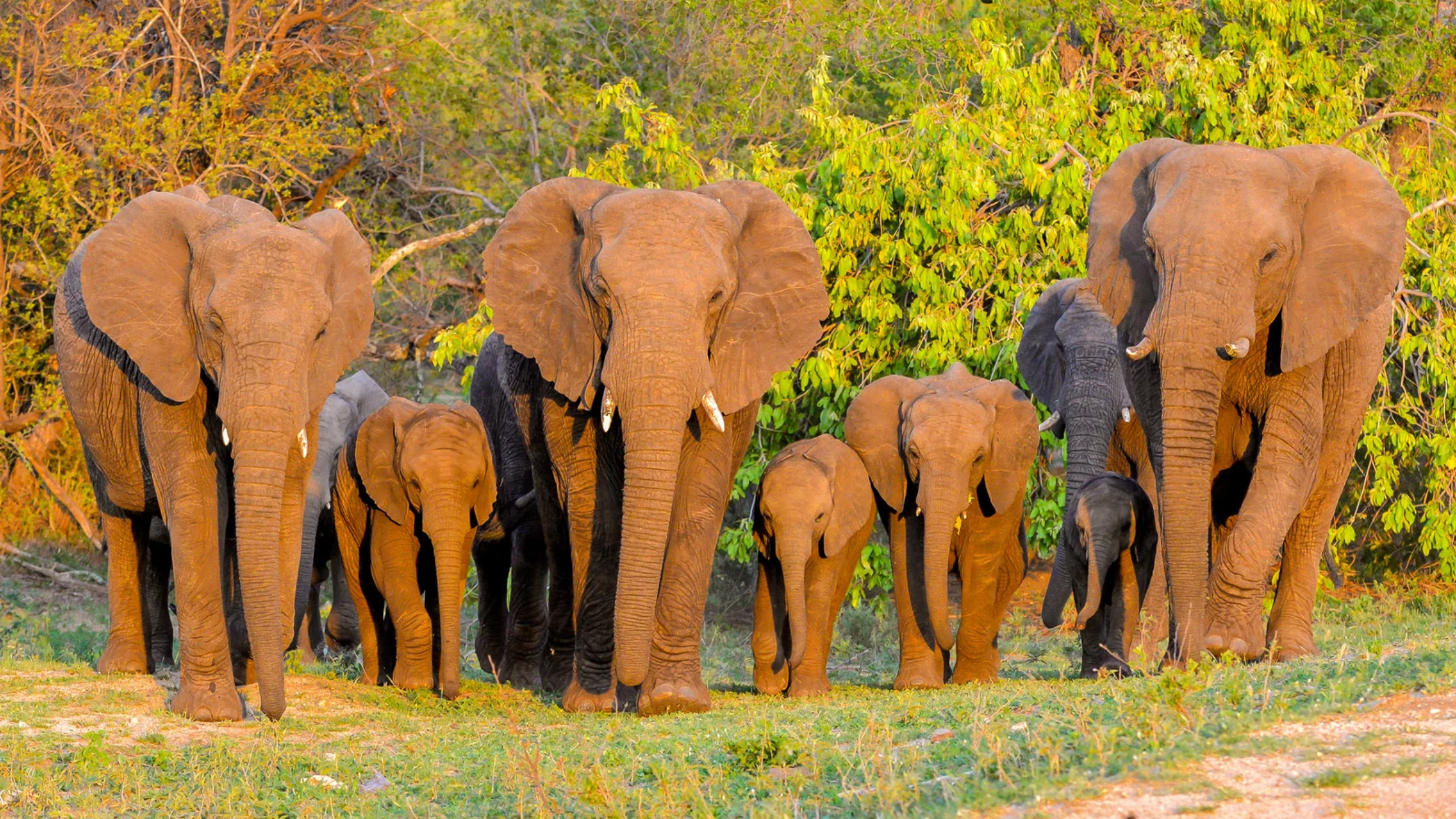
The whales aren’t speaking English, of course. But scientists are finding levels of complexity that might eventually help them understand what those sounds communicate.
Meanwhile, Earth Species Project is developing AI models that can analyze sounds across multiple species. Its open-source NatureLM-audio model can identify and classify animal vocalizations, and researchers are testing how well it works with species the model hasn’t specifically been trained to recognize.
In one evaluation involving recordings submitted to the Australian Museum’s FrogID project, the system achieved 99 percent accuracy distinguishing frog sounds from non-frog sounds. It also achieved 82 percent accuracy identifying species among the project’s five most frequently recorded frogs.
That’s a significant step toward making this technology useful beyond individual research laboratories.
The Real-World Applications Are Getting Interesting
As fascinating as animal communication is, some of the most practical developments have less to do with talking to animals and more to do with protecting them.
In March 2025, Cornell University researchers reported analyzing more than 700,000 hours of bird recordings collected from more than 1,600 locations across approximately 6 million acres of California’s Sierra Nevada forests.
The goal wasn’t to understand what the birds were saying. It was to help forest managers understand which species were present and how wildlife populations might respond to forest management practices.
By May 2026, Cornell researchers had demonstrated that acoustic recordings could also reveal details about bird behavior, not just their presence. That could give conservation teams a much better understanding of what’s happening in remote areas without having to send someone into the field to watch every bird. Apologies to our out-of-work bird-watchers out there.
The technology is attracting serious investment, too.
In October 2025, Cornell received a $1.8 million grant from the Bezos Earth Fund to develop AI-powered acoustic sensors that could help identify illegal activities in forests and monitor ecosystem health.
There are applications beyond forests as well.
NOAA Fisheries uses passive acoustic monitoring to track marine mammals. Real-time detections of North Atlantic right whales can trigger voluntary slow zones for vessels, helping reduce the risk of ships striking endangered whales.
Underwater acoustic monitoring has applications in offshore construction, where detecting marine mammals can help inform environmental protection measures.
This is an important distinction from what we imagined two years ago. Digital bioacoustics isn’t only about the possibility of talking to animals someday. It’s already providing information that researchers, conservation organizations, and government agencies can use.
So, Where Are All the Dr. Doolittle Degrees?
Given those developments, you might expect a wave of new digital bioacoustics degrees.
Not exactly.
What we’re seeing instead may tell us something more useful about how emerging academic fields are developing in our current state of union for higher education.
University College London offers a master’s degree in Ecology and Data Science that includes bioacoustics, biodiversity monitoring, environmental sensors, machine learning, and AI. The program also involves the Zoological Society of London and the Natural History Museum.
Students aren’t simply learning to identify animal calls. They’re learning how to collect environmental data, analyze it, and use the results to address real problems.
At the University of New Hampshire, bioacoustics research internships include projects involving elephant calls, bird classification, and machine learning. Students studying biology, engineering, and computer science are encouraged to participate.
And at Cornell, bioacoustics research brings together conservation scientists, engineers, and data specialists to develop technologies that can be used in the field.
There’s a common thread here. The work is interdisciplinary, and universities are finding ways to bring these skills into existing academic programs.
In fact, that was one of the possibilities we raised in 2024.
Follow the Skills, Not Just the Degree Titles
Here’s where things get interesting for academic program planning.
If an institution looked only for jobs with bioacoustics in the title, it might miss much of the opportunity.
The organizations using these technologies need people who understand ecological research, acoustic sensors, programming, machine learning, and environmental data analysis.
Those skills have applications beyond bioacoustics, including wildlife conservation, environmental consulting, marine research, and ecological monitoring.
That doesn’t mean there’s a booming job market for bioacoustics specialists. We haven’t established that. And research funding, however encouraging, isn’t the same as sustained employer demand.
But it does suggest a question worth asking: Could an existing environmental science or biology program become more attractive by adding practical AI and acoustic monitoring skills?
For some institutions, the answer might be a new certificate or concentration. Others might find that a few carefully selected courses, shared across departments, would accomplish more than a standalone degree.
There’s also a practical advantage. Students who learn to collect, interpret, and analyze environmental data could apply those skills across several occupations, rather than preparing for one highly specialized career.
Of course, institutions would still need to evaluate student interest, competition, employment opportunities, and program economics before investing.
The science is moving quickly. Whether student demand follows is another question.
We’ll Keep Listening
When we first wrote about digital bioacoustics in 2024, the possibility of understanding animal communication was what captured our imagination.
Two years later, that research has advanced, major technology companies are involved, and the practical applications have become much easier to see.
The academic response has been interesting, too. Rather than creating a new degree for every emerging technology, some universities are finding opportunities to connect programs they already offer.
That’s worth watching. Not every promising field needs its own degree, and not every emerging skill will appear in a job title.
Sometimes an emerging program is hiding in plain sight, somewhere between two departments that haven’t had much reason to work together before.
And as for whether we’ll ever have a proper conversation with a whale?
We’re still listening.
What Other Emerging Programs Are Worth Watching?
Join Gray DI on January 12, 2027, for our annual Emerging Programs webinar, where we’ll explore the ideas, industries, and innovations that could shape tomorrow’s academic programs.