


Labor market data helps colleges and universities evaluate whether an academic program connects to real employment opportunities. The strongest analysis does not rely on one number. It combines job postings, employment volume, wages, underemployment, graduate outcomes, skills demand, student demand, and competition.
Note: While labor market data provides critical insights, it represents just one component of overall market demand and must be evaluated alongside student demand and competitive landscape metrics.
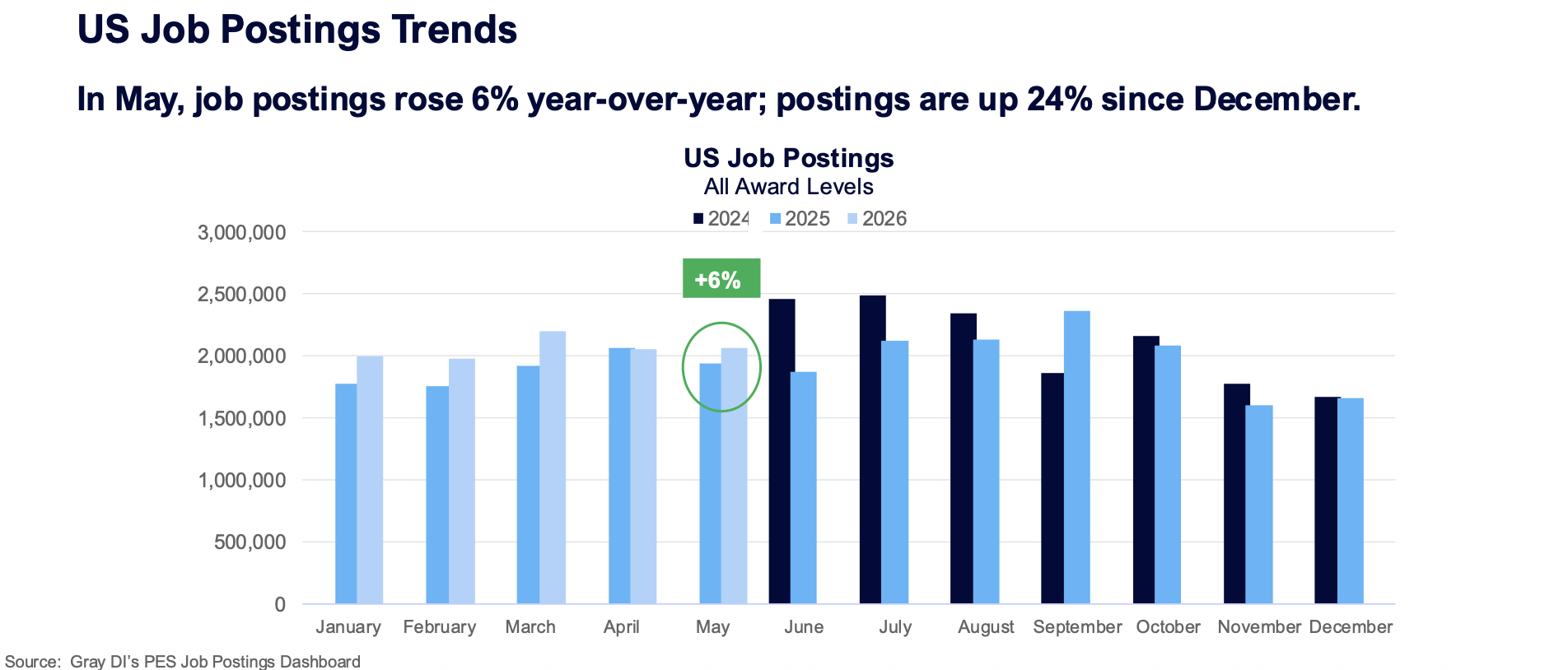 U.S. job postings rose 6% year over year in May and were up 24% since December, signaling continued employer demand. Source: Gray DI Demand for Higher Education Programs, June 25, 2026.
Job Postings Increased Six Percent In May
Job postings were up six percent year over year in May and have increased by 24 percent since December.
This indicates continued employer demand and resilience in the labor market. For academic program planning, rising job postings can signal opportunity in fields where employers need talent.
However, strong job growth can also create pressure for higher education. When jobs are easier to find, some prospective students may choose work over school. When unemployment rises, more people often return to school to improve their employment prospects.
What this means: Strong job postings are good for graduate opportunities, but they may not automatically translate into higher enrollment.
Management And Technical Roles Are Growing
The labor market data showed growth in several occupations, including industrial engineers, software developers, physical therapists, marketing managers, nursing assistants, financial managers, general and operations managers, project management specialists, and sales managers.
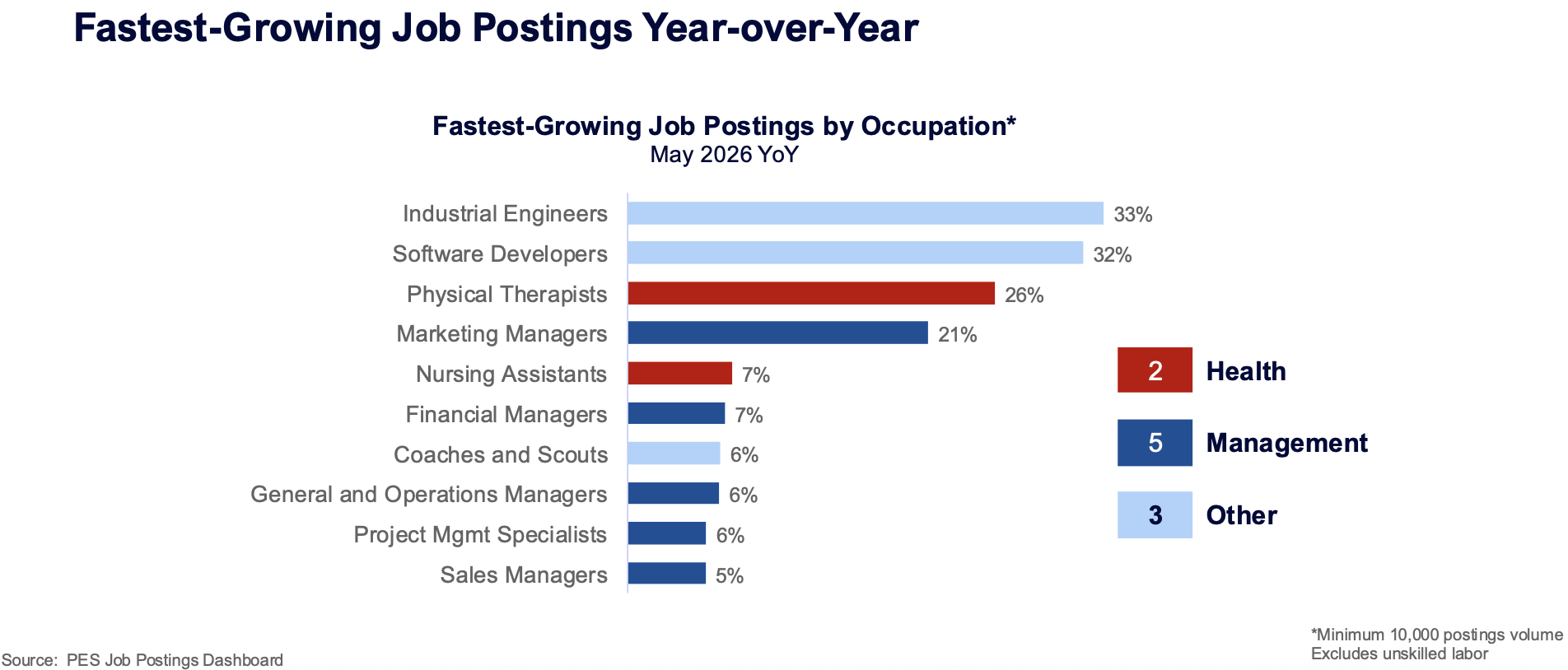 Management roles represented five of the 10 fastest-growing occupations by job postings in May 2026. Source: Gray DI Demand for Higher Education Programs, June 25, 2026.
This matters because many graduates do not work in occupations directly tied to the name of their major. Over time, many move into management or operations roles where they use transferable skills such as communication, problem-solving, analysis, leadership, and time management.
Software developer postings were also up 32 percent, challenging the idea that AI is simply reducing demand for technical talent.
What this means: Academic programs should not be judged only by direct job matches. Many degrees create value by preparing graduates for broader career paths.
Business And Operations Skills Are Rising
Several business and operations skills had strong year-over-year growth in job postings, including scalability, operational excellence, business operations, automation, and operational efficiency.
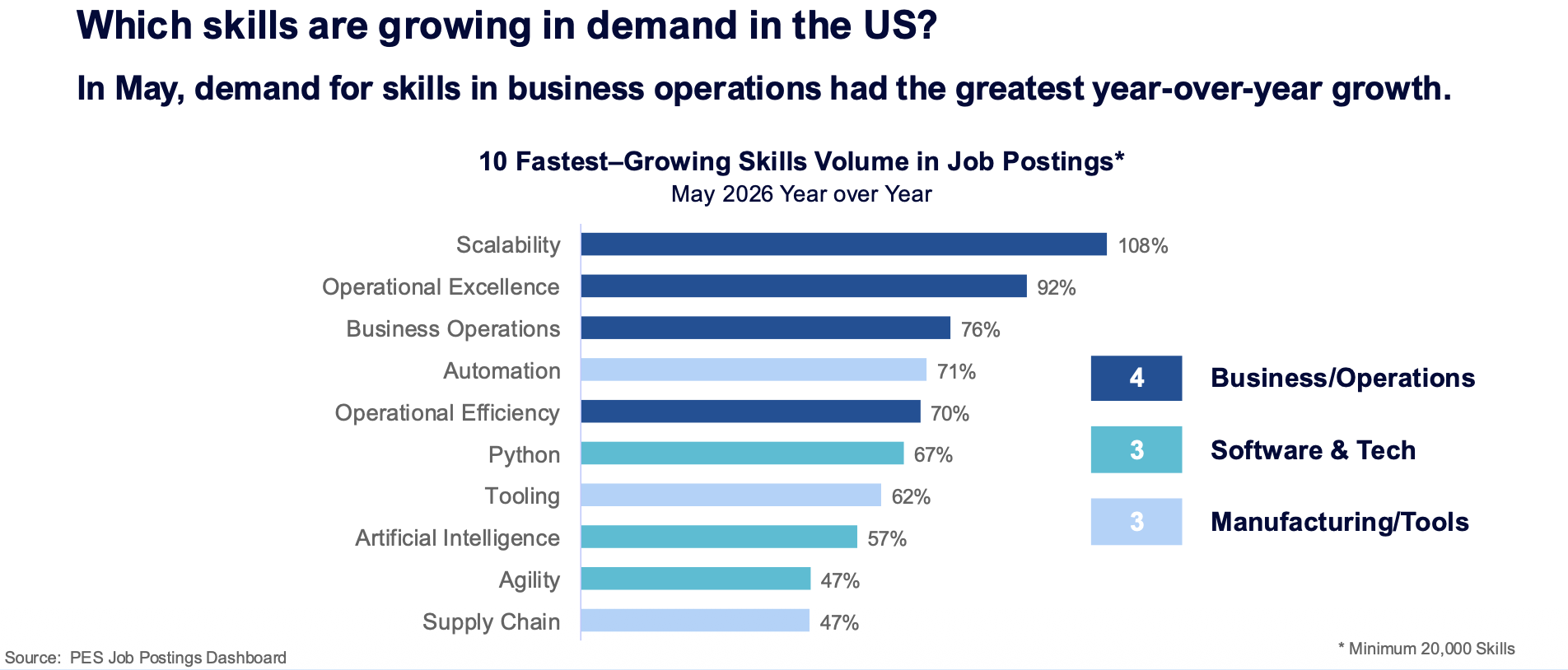 Business operations, software and technology, and manufacturing-related skills were among the fastest-growing skill areas in May 2026. Source: Gray DI Demand for Higher Education Programs, June 25, 2026.
This data points to a labor market that increasingly rewards people who can improve systems, increase efficiency, scale organizations, and apply technology to business problems.
What this means: Operations, automation, and AI skills are relevant across many programs, not only computer science or business. They increasingly matter in health care, logistics, manufacturing, public administration, education, and other fields.
Supply Chain Shows Strong Program Opportunity
Supply Chain is highlighted as a strong program example. A bachelor’s in supply chain management scored in the 98th percentile overall among tracked bachelor’s programs.
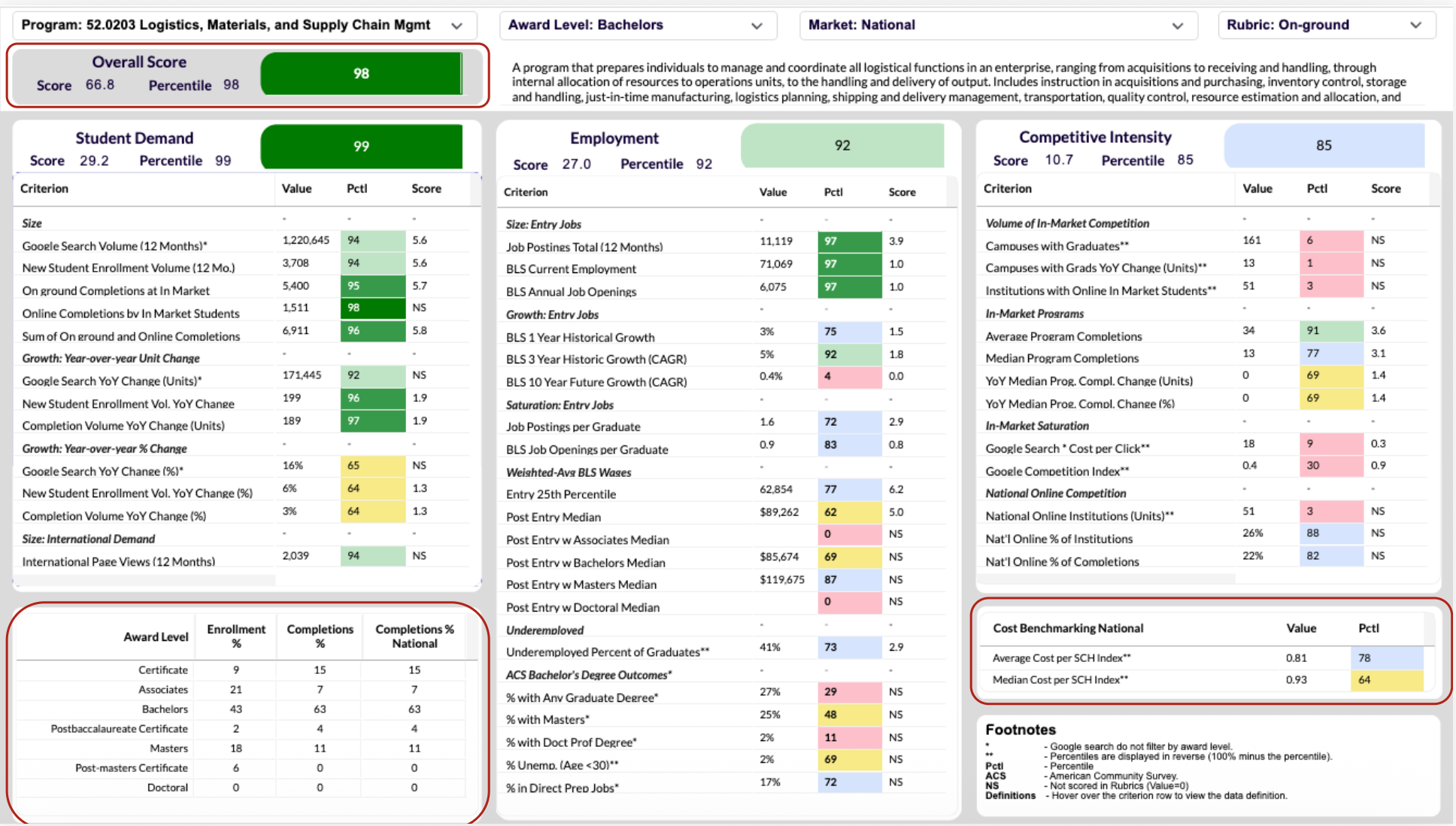 Supply Chain scored in the 98th percentile overall, with strong student demand, employment opportunity, and competitive intensity metrics. Source: Gray DI Demand for Higher Education Programs, June 25, 2026.
Supply chain also scored in the 99th percentile for student demand, with strong size metrics across Google searches, new student enrollment, and completions.
Student demand metrics included:
- Google searches and new enrollment in the 94th percentile
- Overall completions in the 96th percentile
- Online completions in the 98th percentile
- Google searches up 16 percent year over year
- New student enrollment up six percent
- Completions up three percent
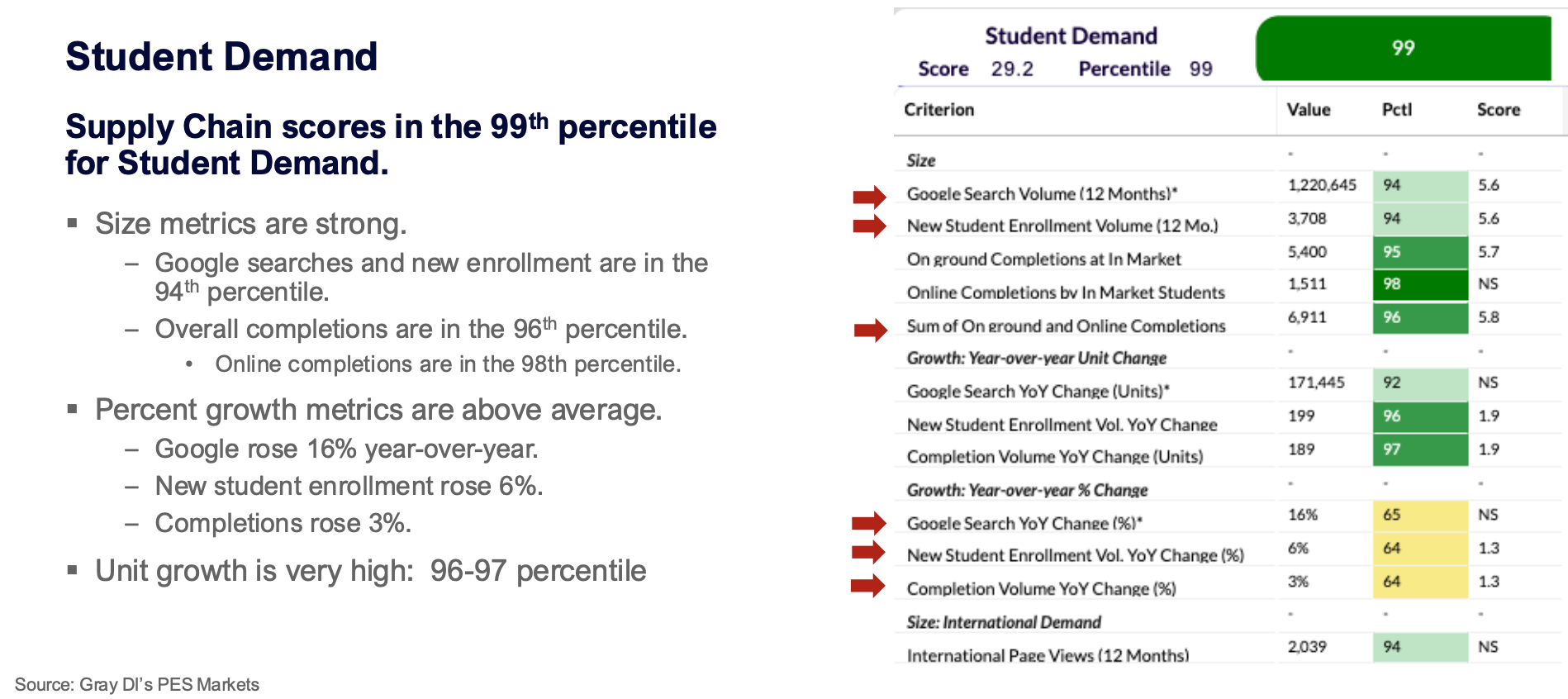 Supply Chain student demand was strong across search volume, enrollment, and completions. Source: Gray DI Demand for Higher Education Programs, June 25, 2026.
What this means: Supply Chain is not just a labor market opportunity. It also has strong student demand, which is important because a program with strong employment demand but weak student interest may be harder to grow.
Supply Chain Employment Was In The 92nd Percentile
Supply chain scored in the 92nd percentile for employment opportunity.
Employment indicators included:
- Entry-level job postings in the 97th percentile
- Current employment in the 97th percentile
- Annual job openings in the 97th percentile
- Entry-level jobs up three percent year over year
- Three-year historic employment growth of five percent
- Job postings per graduate: 1.6
- Entry-level wage proxy in the 77th percentile
- Post-entry median wage with a bachelor’s in the 69th percentile
- Underemployment: 41 percent
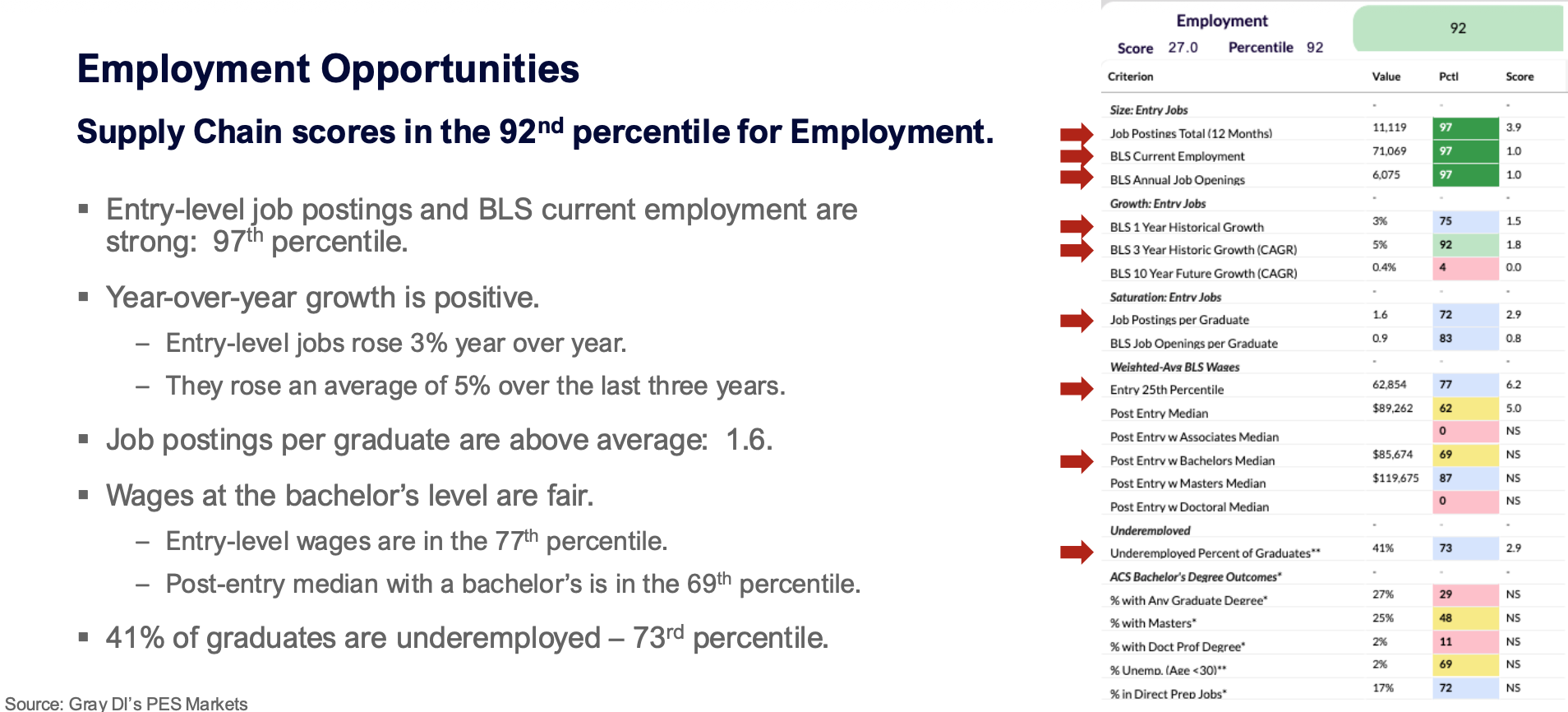 Supply Chain’s employment opportunity score reflects strong job postings, employment volume, annual openings, and wage indicators. Source: Gray DI Demand for Higher Education Programs, June 25, 2026.
What this means: Supply Chain has a strong labor market foundation. The field is large, hiring activity is strong, and employment is growing. However, the 41 percent underemployment rate shows why institutions should still evaluate whether graduates are moving into roles that fully use their education.
Graduate Outcomes Show Broader Career Paths
Graduate outcomes data showed that Supply Chain graduates enter a wide range of occupations.
An analysis of 45,483 bachelor’s graduates in Supply Chain found that they entered 689 occupations. Common pathways included transportation, storage, and distribution managers; logisticians; general and operations managers; buyers and purchasing agents; chief executives; purchasing managers; sales managers; and marketing managers.
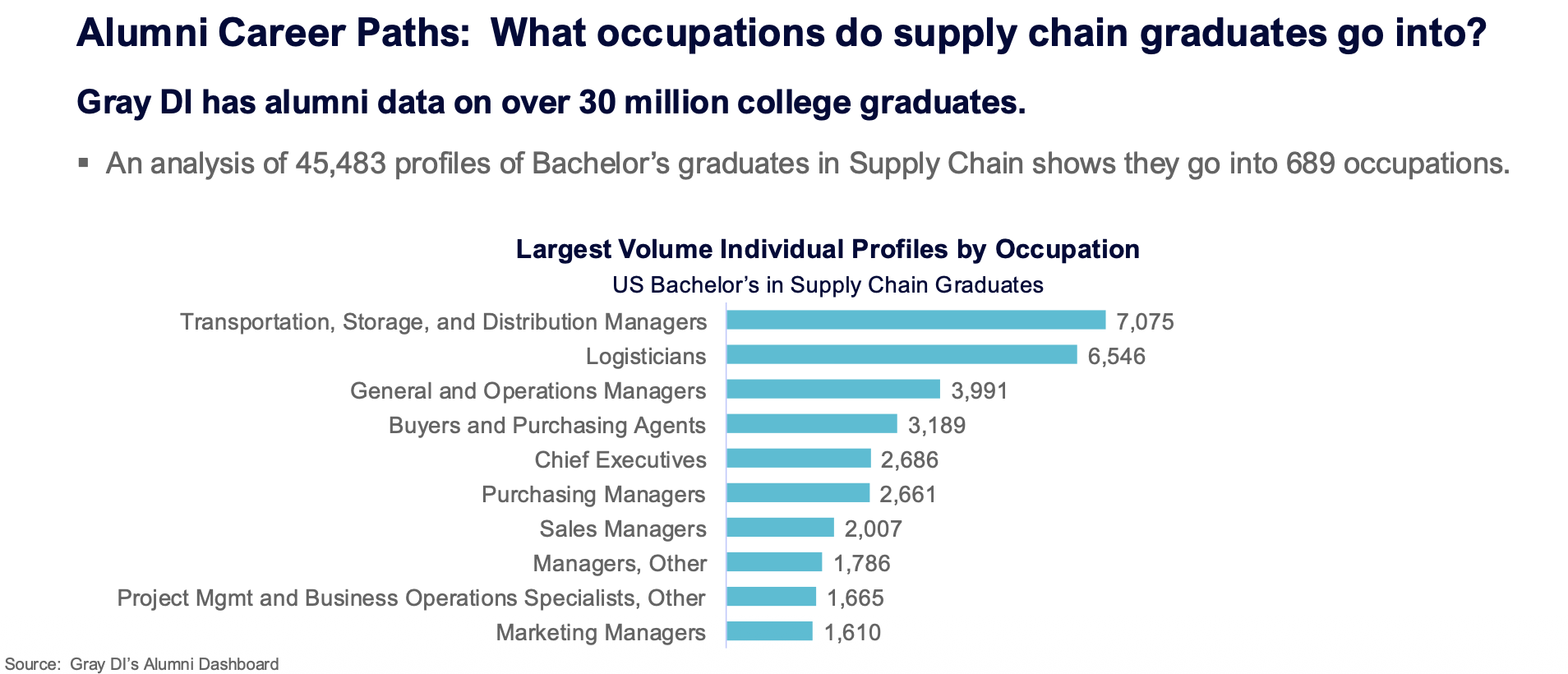 Supply Chain graduates enter 689 occupations, showing the importance of looking beyond narrow degree-to-job matches. Source: Gray DI Demand for Higher Education Programs, June 25, 2026.
What this means: Academic programs should not be evaluated only by one-to-one occupation matches. Graduate outcomes data provides a more realistic view of where students actually go.
Competition Is High
Supply Chain scored in the 85th percentile for competitive intensity.
Competitive indicators included:
- 161 colleges offering the program
- 13 additional campuses with completions in 2024
- Twenty-six percent of bachelor’s in supply chain programs offered online
- Twenty-two percent of completions occurring online
- High marketing costs
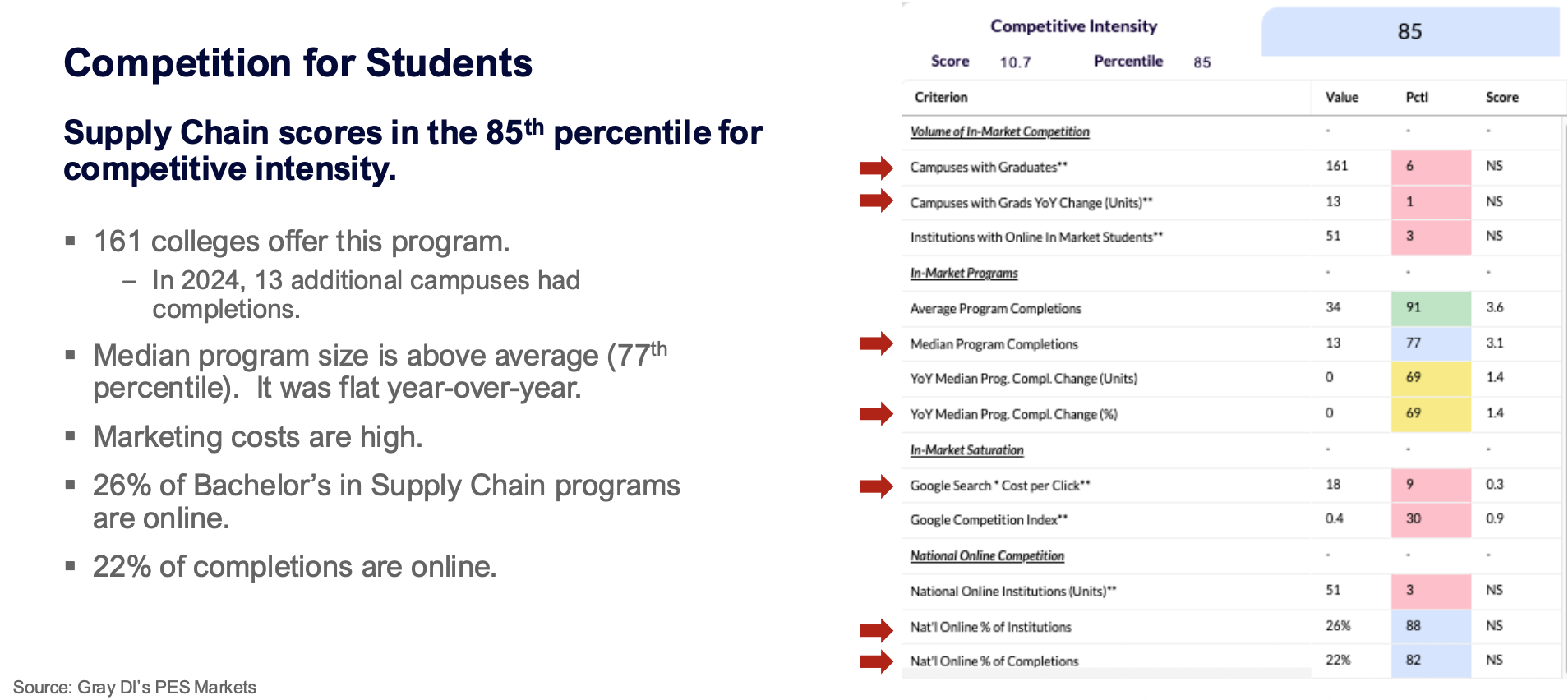 Supply chain is attractive, but competitive, with 161 colleges offering the program. Source: Gray DI Demand for Higher Education Programs, June 25, 2026.
What this means: Supply Chain is a strong opportunity, but institutions need a clear positioning strategy. This is especially important for online growth, where competition and paid search costs can be high.
The Data Takeaway
The labor market data shows that academic program opportunity depends on several connected metrics.
Job postings show whether employers are hiring. Employment volume shows the size of the labor market. Annual openings show recurring demand. Wages show economic value for graduates. Underemployment shows whether graduates are fully using their education. Graduate outcomes show where students actually go. Skills data shows what employers increasingly need. Student demand shows whether people want the program. Competitive intensity shows whether the institution can win in the market.
For Supply Chain, the data points to a strong program opportunity: high student demand, high employment opportunity, solid wages, broad graduate outcomes, and below-average operating costs. The main caution is competition, especially in online markets and paid search.
For broader program strategy, the data shows why colleges should avoid relying on job postings or direct-preparation jobs alone. Labor market data is most useful when it explains both employer demand and real graduate pathways.